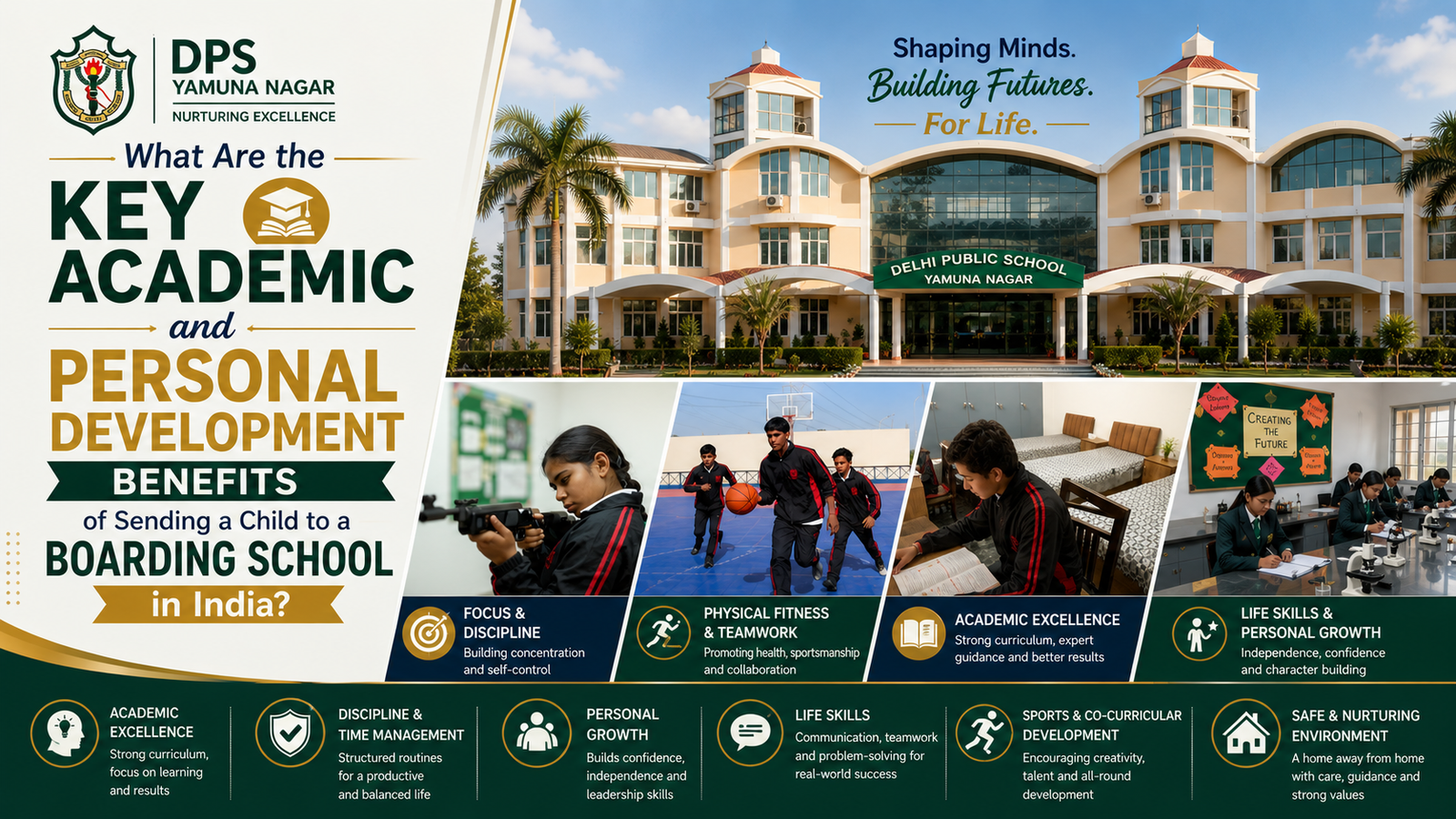
For many parents, choosing a boarding school is about much more than academics. It is about providing children with an environment where they can grow into confident, independent, and responsible individuals while receiving a quality education.
Modern boarding schools in India combine structured learning, experienced faculty, residential care, and diverse extracurricular opportunities to prepare students for success in higher education and life. With dedicated study hours, strong peer interaction, and holistic development programmes, boarding schools help students build skills that extend far beyond the classroom.
If you are considering boarding school admission for your child, understanding the academic and personal development benefits can help you make an informed decision.
Why Parents Choose Boarding Schools
Unlike day schools, boarding schools provide a structured environment where students learn, live, and grow together. Every part of the day—from classroom learning to sports, meals, and evening study sessions—is designed to encourage discipline, responsibility, and balanced development.
The result is an educational experience that nurtures intellectual, emotional, social, and physical growth.
Academic Benefits of Boarding Schools
1. Structured Learning Environment
One of the biggest advantages of boarding schools is their organised daily routine.
Students benefit from:
- Fixed study schedules
- Supervised preparation sessions
- Dedicated homework time
- Limited distractions
- Consistent academic support
This disciplined approach helps students develop effective study habits and time management skills.
2. Individual Academic Support
Teachers in boarding schools interact with students throughout the day, allowing them to identify learning gaps early and provide personalised guidance.
Students often receive:
- Doubt-clearing sessions
- One-to-one mentoring
- Additional practice where required
- Regular academic feedback
- Continuous performance monitoring
This close academic support helps students perform with greater confidence.
3. Better Preparation for Competitive Exams
Many boarding schools encourage students to prepare systematically for competitive examinations while continuing their regular studies.
Students develop:
- Strong conceptual understanding
- Analytical thinking
- Problem-solving abilities
- Consistent study routines
- Examination confidence
These habits are valuable for national-level entrance examinations as well as higher education.
4. Exposure to Modern Learning Methods
Leading boarding schools now integrate technology into education through:
- Smart classrooms
- Robotics laboratories
- STEM education
- Coding programmes
- Science projects
- Digital learning platforms
Practical learning helps students connect classroom concepts with real-world applications.
Personal Development Benefits
5. Independence and Self-Confidence
Living away from home teaches children how to become self-reliant.
Students gradually learn to:
- Manage their daily routine
- Organise their belongings
- Take responsibility for their actions
- Solve everyday challenges
- Make informed decisions
These experiences build confidence that stays with them throughout life.
6. Strong Time Management Skills
Boarding school schedules encourage students to balance:
- Academics
- Sports
- Extracurricular activities
- Study hours
- Recreation
- Rest
Learning how to prioritise responsibilities prepares students for university and professional life.
7. Improved Communication Skills
Students interact daily with peers from different regions, cultures, and backgrounds.
This diverse environment helps them develop:
- Effective communication
- Teamwork
- Collaboration
- Leadership
- Public speaking confidence
- Respect for different perspectives
These interpersonal skills are highly valued in higher education and future workplaces.
8. Leadership and Responsibility
Boarding schools provide numerous opportunities for students to take initiative.
Leadership roles may include:
- House captains
- Student council
- Club leaders
- Event organisers
- Sports captains
- Community service volunteers
Such experiences teach accountability, decision-making, and teamwork.
9. Emotional Growth and Resilience
Living in a residential environment helps children develop emotional maturity.
Students learn to:
- Adapt to new situations
- Build lasting friendships
- Handle challenges independently
- Develop empathy
- Resolve conflicts respectfully
These life skills contribute significantly to long-term success.
Holistic Development Beyond Academics
The best boarding schools recognise that education is not limited to textbooks.
Students participate in:
- Sports
- Music
- Dance
- Theatre
- Art
- Debate
- Quiz competitions
- Literary activities
- Social service initiatives
- Innovation clubs
These experiences help students discover new talents while developing creativity and confidence.
Health, Fitness and Well-being
Residential schools also promote healthy lifestyles through:
- Balanced nutrition
- Regular physical activity
- Yoga and fitness programmes
- Outdoor sports
- Medical support
- Wellness initiatives
A healthy body supports better concentration and academic performance.
Delhi Public School Yamunanagar: Supporting Academic Excellence and Personal Growth
Among the leading CBSE boarding schools in Haryana, Delhi Public School Yamunanagar provides an educational environment that focuses equally on academic achievement and holistic development.
Students benefit from:
- CBSE curriculum delivered by experienced faculty
- Structured academic mentoring and supervised study hours
- Dedicated Atal Tinkering Lab for robotics and STEM learning
- Modern science and computer laboratories
- Separate boarding facilities for boys and girls
- Extensive sports infrastructure
- Cultural, literary, and leadership opportunities
- Safe residential environment with dedicated hostel staff
- Value-based education that encourages discipline, responsibility, and empathy
The school’s residential programme helps students develop the confidence, independence, and life skills needed to excel in an increasingly competitive world.
Is Boarding School Right for Every Child?
Every child is unique, and the decision to choose a boarding school should consider their personality, readiness, and educational goals.
Boarding schools can be especially beneficial for students who:
- Thrive in structured environments
- Enjoy participating in multiple activities
- Wish to develop greater independence
- Want access to quality residential education
- Are interested in holistic learning experiences
A campus visit and discussions with school faculty can help parents determine whether the environment is the right fit for their child.
Final Thoughts
A boarding school education offers much more than academic instruction. It provides students with opportunities to become disciplined learners, confident communicators, responsible leaders, and compassionate individuals.
Schools like Delhi Public School Yamunanagar demonstrate how a well-balanced residential environment can support academic excellence while nurturing personal growth, leadership, innovation, and character.
For parents seeking an education that prepares children for both examinations and life, a quality boarding school can be a valuable investment in their child’s future.
Frequently Asked Questions (FAQs)
1. What are the academic benefits of boarding schools?
Boarding schools provide structured study routines, personalised mentoring, supervised preparation, and a focused learning environment that supports academic achievement.
2. How do boarding schools help children become independent?
Living away from home teaches students responsibility, time management, decision-making, self-discipline, and confidence in handling everyday challenges.
3. Do boarding schools support extracurricular development?
Yes. Most boarding schools offer sports, arts, music, leadership programmes, clubs, debate, community service, and cultural activities as part of holistic education.
4. Are boarding schools suitable for preparing students for future careers?
Boarding schools help students develop critical thinking, leadership, communication, collaboration, and problem-solving skills that are valuable across higher education and professional careers.
5. Why choose a CBSE boarding school in Haryana?
CBSE boarding schools in Haryana combine recognised academics with modern infrastructure, experienced faculty, residential facilities, and opportunities for holistic student development in a safe and structured environment.