Academic excellence is important, but success in today’s world requires much more than high grades. Children also need confidence, leadership skills, emotional intelligence, creativity, resilience, and the ability to work with others. This is why many parents are choosing residential schools in India that focus on holistic development alongside academic achievement.
Unlike traditional day schools, residential schools provide a structured environment where students learn, live, play, and grow together. Every aspect of campus life contributes to developing well-rounded individuals who are prepared for higher education, careers, and life beyond school.
If you are considering boarding school admissions, understanding how residential schools support holistic development can help you choose the right institution for your child.
What Is Holistic Development?
Holistic development means nurturing every aspect of a child’s growth—not just academic knowledge.
It focuses on developing:
- Intellectual abilities
- Physical fitness
- Emotional well-being
- Social skills
- Creativity
- Leadership qualities
- Moral values
- Communication skills
- Critical thinking
- Independence
The goal is to help students become confident, responsible, and compassionate individuals who can adapt to an ever-changing world.
Why Residential Schools Offer a Unique Learning Environment
Residential schools create an immersive educational experience. Since students live on campus, learning continues beyond classroom hours through structured routines, extracurricular activities, peer interactions, and guided mentorship.
This environment encourages continuous personal growth while providing opportunities to apply classroom learning in real-life situations.
1. Building Independence and Responsibility
One of the greatest advantages of residential education is that students gradually become more self-reliant.
Living away from home teaches children to:
- Manage their daily routine
- Organise their belongings
- Meet deadlines
- Take responsibility for their actions
- Make informed decisions
- Solve everyday challenges independently
These life skills prepare students for university life and future careers.
2. Encouraging Leadership Skills
Residential schools provide students with multiple opportunities to take initiative and lead others.
Leadership opportunities include:
- Student council
- House captain roles
- Club leadership
- Sports captaincies
- Cultural event management
- Community service initiatives
These experiences help students develop confidence, accountability, teamwork, and decision-making abilities.
3. Promoting Emotional Intelligence
Living with peers from different backgrounds helps students understand diverse perspectives and develop emotional maturity.
Residential schools encourage students to:
- Build meaningful friendships
- Respect diversity
- Manage emotions effectively
- Resolve conflicts peacefully
- Develop empathy
- Support one another
These experiences contribute significantly to personal growth and healthy relationships.
4. Developing Strong Communication Skills
Students communicate with teachers, mentors, classmates, and hostel staff throughout the day.
Regular participation in:
- Group discussions
- Debates
- Public speaking
- Presentations
- Collaborative projects
helps students become confident communicators and active listeners.
5. Creating a Culture of Discipline
A well-planned daily routine teaches students valuable habits that stay with them throughout life.
Students learn to balance:
- Academics
- Study hours
- Sports
- Extracurricular activities
- Recreation
- Personal responsibilities
This disciplined lifestyle promotes consistency, punctuality, and effective time management.
6. Supporting Physical Fitness and Healthy Living
Holistic development includes maintaining physical health.
Residential schools encourage students to participate in:
- Cricket
- Football
- Basketball
- Athletics
- Yoga
- Fitness programmes
- Indoor games
- Outdoor recreational activities
Regular exercise improves physical fitness while enhancing concentration, confidence, and emotional well-being.
7. Encouraging Creativity and Innovation
The best residential schools help students explore their interests beyond traditional academics.
Students participate in:
- Music
- Dance
- Theatre
- Fine arts
- Creative writing
- Robotics
- STEM projects
- Coding
- Innovation clubs
- Science exhibitions
Creative exploration helps students discover their talents and develop innovative thinking.
8. Character Building Through Values
Residential education places significant emphasis on values that shape responsible citizens.
Students learn the importance of:
- Respect
- Honesty
- Compassion
- Integrity
- Discipline
- Teamwork
- Social responsibility
- Environmental awareness
These values become an integral part of their personality and decision-making.
9. Continuous Guidance and Mentorship
Unlike day schools, residential schools provide students with regular access to teachers, house parents, mentors, and counsellors.
This support system helps students:
- Adjust to hostel life
- Overcome academic challenges
- Develop confidence
- Manage stress
- Set personal goals
- Maintain emotional well-being
Consistent mentoring creates a positive and supportive learning environment.
Delhi Public School Yamunanagar: Fostering Holistic Development
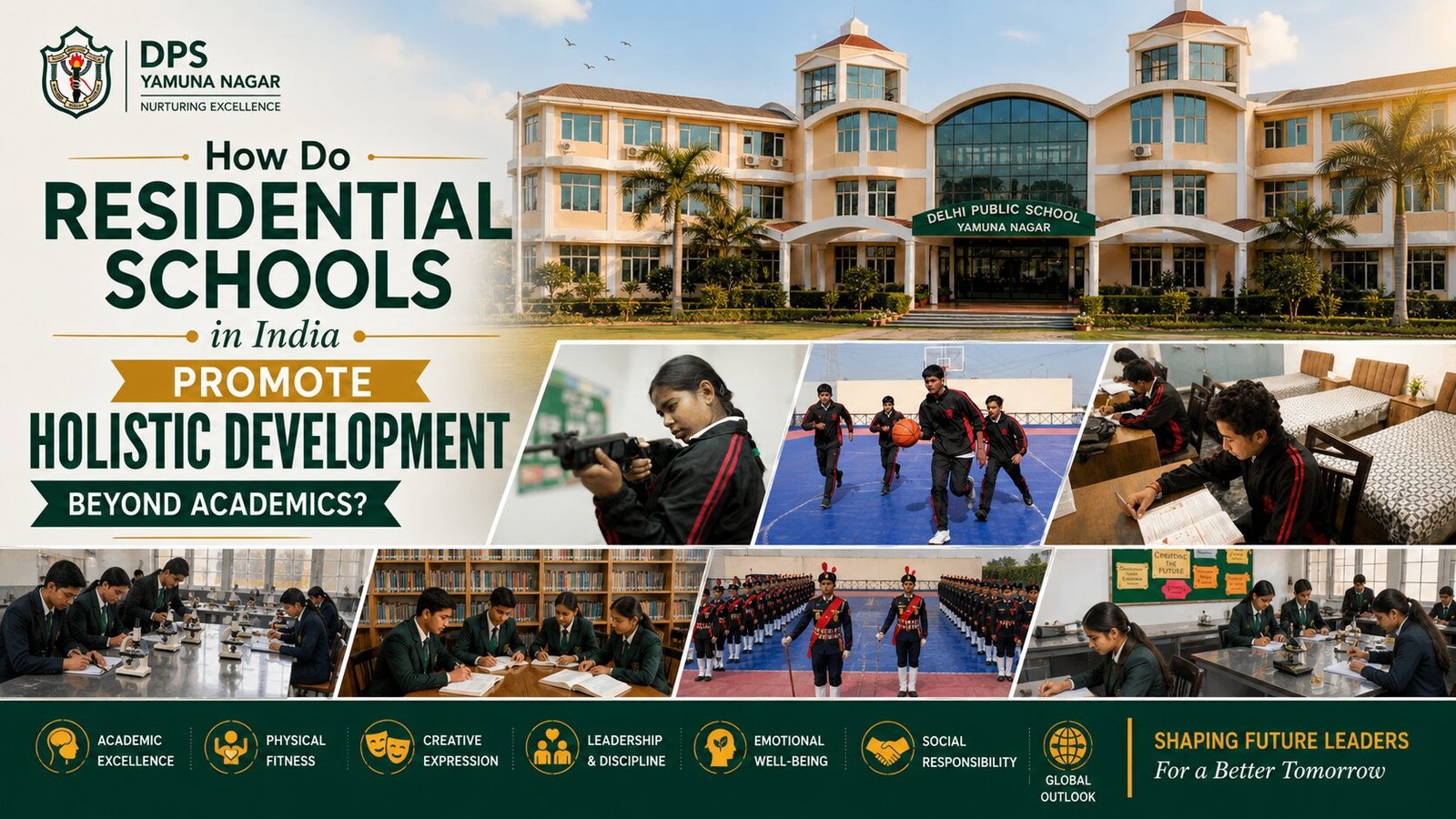
For parents seeking a CBSE residential school in Haryana, Delhi Public School Yamunanagar offers a balanced educational environment where academic excellence is complemented by comprehensive personal development.
Students benefit from:
- Strong CBSE academic programme
- Dedicated Atal Tinkering Lab for robotics and STEM education
- Experienced teachers and academic mentors
- Structured hostel life with supervised study hours
- Extensive sports facilities
- Cultural and literary activities
- Leadership opportunities
- Separate boarding facilities for boys and girls
- Safe and secure campus environment
- Value-based education that nurtures discipline, empathy, and responsibility
The school’s integrated approach ensures students grow into confident learners and responsible citizens prepared for future challenges.
How Parents Can Evaluate Holistic Development in a Residential School
During a school visit, consider asking:
- What extracurricular programmes are available?
- How are leadership skills developed?
- Does the school offer robotics and STEM education?
- What sports facilities are available?
- How does the school support students emotionally?
- Are counsellors and house parents available?
- How are communication and life skills encouraged?
- What values are emphasised in daily school life?
The answers to these questions provide valuable insights into how the school supports overall student development.
Final Thoughts
Residential schools offer an educational experience that extends far beyond textbooks and examinations. Through structured routines, leadership opportunities, extracurricular activities, mentorship, and community living, students develop the academic knowledge, life skills, and character needed to succeed in every stage of life.
Schools such as Delhi Public School Yamunanagar demonstrate how a nurturing residential environment can help students achieve academic excellence while becoming confident, disciplined, compassionate, and future-ready individuals.
Choosing a residential school that prioritises holistic development can have a lasting positive impact on your child’s education, personality, and future success.
Frequently Asked Questions (FAQs)
1. What does holistic development mean in a residential school?
Holistic development refers to nurturing a student’s academic, physical, emotional, social, creative, and ethical growth to help them become well-rounded individuals.
2. Why do residential schools focus on holistic development?
Residential schools provide a structured environment where students have opportunities to learn through academics, sports, leadership, cultural activities, and everyday interactions with peers and mentors.
3. How do residential schools help children become independent?
Living on campus encourages students to manage their routines, make responsible decisions, solve problems, and develop confidence while receiving appropriate guidance.
4. Do residential schools offer extracurricular activities?
Yes. Most residential schools provide sports, performing arts, music, debate, clubs, robotics, STEM programmes, leadership initiatives, and community service opportunities.
5. Why choose a CBSE residential school in Haryana?
CBSE residential schools in Haryana combine quality academics with modern facilities, experienced faculty, structured boarding, extracurricular opportunities, and holistic development in a safe learning environment.