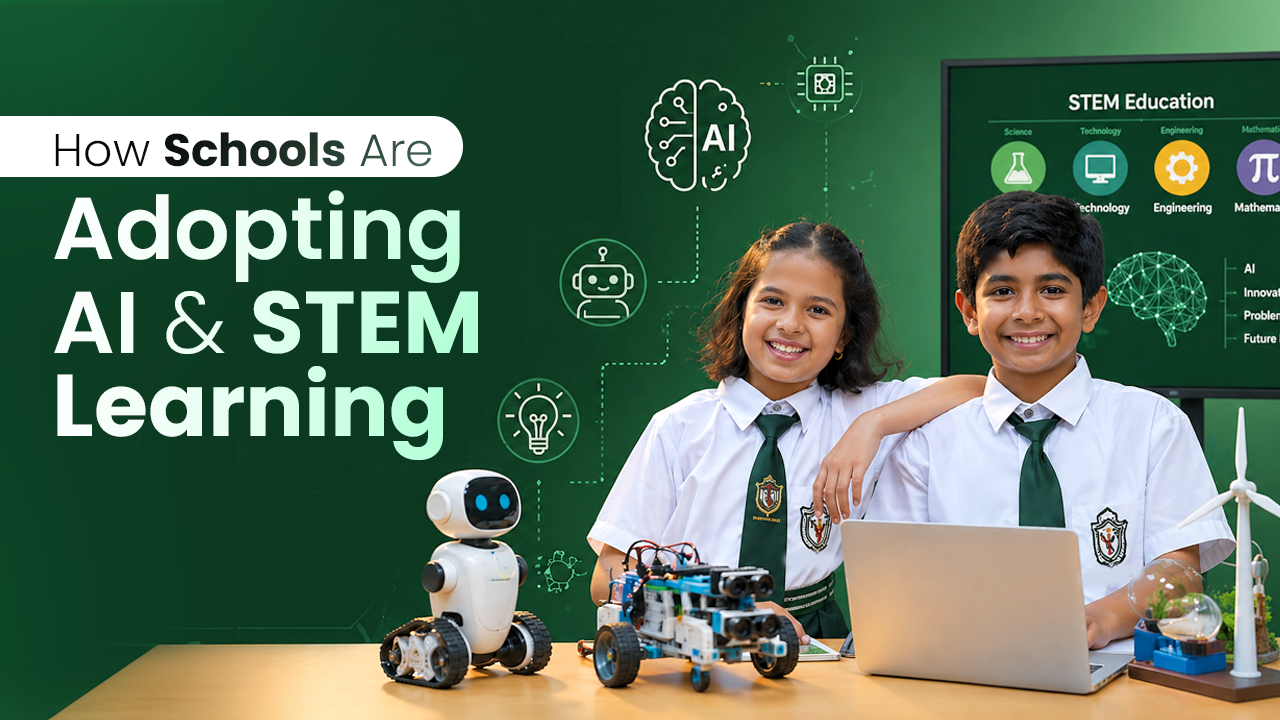
The way we understand education is changing faster than ever before and classrooms are starting to feel very different from what they used to be.
By 2026, Artificial Intelligence (AI) and STEM (Science, Technology, Engineering and Mathematics) are not merely being introduced to classrooms – they are becoming the core of learning. This blog will delve into how AI and STEM technologies are transforming classrooms into intelligent learning environments, tailored learning experiences and practical skill building for the real world.
Wait, AI in Schools?
If you’ve ever used ChatGPT for homework or asked Alexa a question, you’ve already used AI without even realising it. Now, schools are taking that same idea and turning it into everyday learning.
From personalized learning apps to robotics and coding in classrooms, AI and STEM are becoming a real part of education, not just buzzwords. Even when parents explore the best CBSE co-ed boarding schools in India, this shift toward future-ready learning is becoming a key factor.
At DPS Yamunanagar, this isn’t a future idea, it’s already part of how students learn, explore, and build skills for tomorrow.
How Does “AI in the Classroom” Actually Look Like?
Here’s the thing: it doesn’t look like a sci-fi movie. It’s actually pretty practical and, once you get the hang of it, genuinely fun.
Some real examples happening in schools right now:
- AI tutors that explain concepts differently if you didn’t get it the first time (no judgment, no eye rolls)
- Coding classes starting as early as middle school, using platforms like Scratch, Python, and even block-based AI tools
- STEM labs where students design, prototype, and test real projects bridges, apps, solar cars, you name it
- Data literacy lessons that teach you how to read graphs, spot fake news, and understand why algorithms show you what they show you
- Virtual labs where you can simulate chemistry experiments without blowing anything up (win-win).
How DPS Yamunanagar Is Leading the Change
At DPS Yamunanagar, is one of the best boarding schools in Haryana ,and it believes education should match the world students are growing into, not the one that existed 30 years ago.
Our approach to STEM and AI learning is designed to be hands-on, relevant, and genuinely exciting. Students here aren’t just reading about artificial intelligence, they’re exploring how it works, questioning its limitations, and thinking about how to use it responsibly.
Whether it’s through science fairs that encourage real research, coding workshops, math olympiads, or innovation challenges the idea is simple: give students a reason to be curious, and then get out of their way.
We’re not just preparing students for exams. We’re preparing them for a world that doesn’t exist yet.
Is AI Going to Replace Teachers?
This is one of the most common concerns and the answer is no.
AI cannot replace teachers because teaching is not just about delivering information. It is about understanding students, guiding them, and supporting their emotional and intellectual growth.
Final Verdict
The shift toward AI and STEM isn’t just a trend; it’s a complete glow-up for education and it’s also redefining what parents look for when choosing the best boarding school in India.
Whether you’re into building robots or using AI to analyze historical data, the tools available in 2026 are designed to help you find your “main character” energy in the world of tech and learning
FAQs (Optimized for Voice Search)
Schools are using AI through personalized learning apps, AI tutors, automated grading, and smart assessments to make learning more efficient and tailored to each student.
STEM learning focuses on science, technology, engineering, and math through practical activities like coding, robotics, and real-world problem-solving.
AI and STEM help students develop critical thinking, creativity, and technical skills that are essential for future careers.
No, AI supports teachers by handling routine tasks, while teachers focus on guiding, mentoring, and helping students understand concepts deeply.
Students gain practical knowledge, improve problem-solving skills, explore career interests early, and become better prepared for future opportunities.